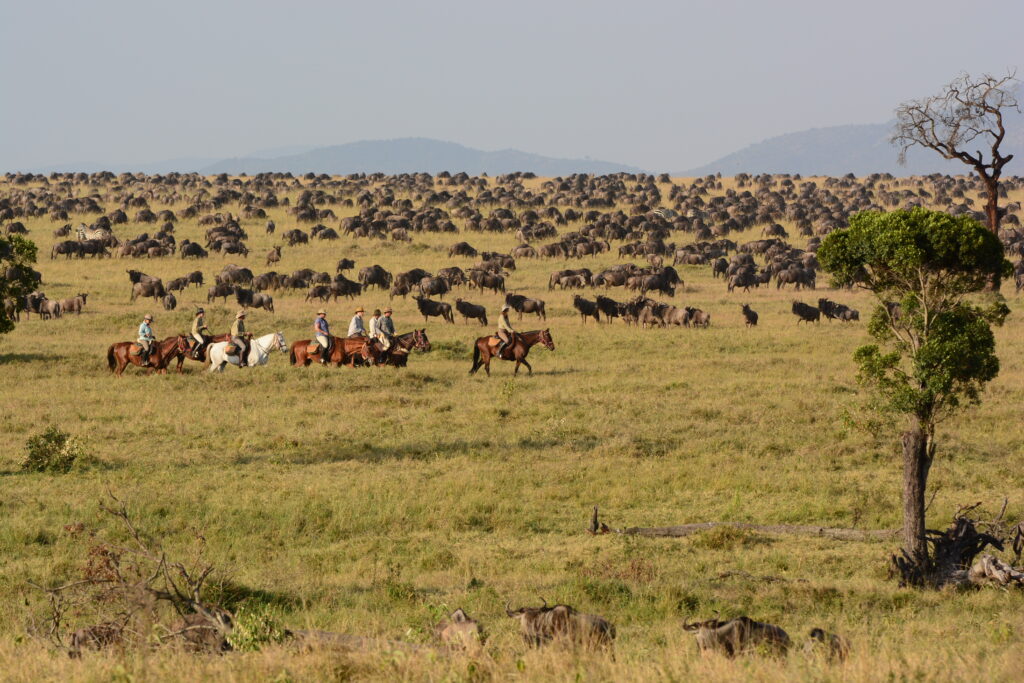
Over two million wildebeest. Hundreds of thousands of zebra and gazelle. Moving in a vast, ancient circle across the Serengeti and the Masai Mara, following the rains, following the grass, following an instinct that predates human memory.
It is the largest overland migration on the planet. And most people get it completely wrong.
They book at the wrong time. They stay in the wrong camp. They expect a Hollywood river crossing and feel vaguely disappointed when they spend a morning watching a hundred thousand wildebeest refuse to enter the water. They go home and say it was amazing, but quietly wonder if they missed something.
Here’s everything you actually need to know, from someone who has been watching this migration, and organising trips around it, for a very long time.
And a timely note: with the world feeling a little unsettled this year, the small, gorgeous camps that are usually booked solid for migration season have space. That means you can still get in for this month or next, and watch a spectacle that most people spend years planning for. Don’t wait for next year.

What the migration actually is
The wildebeest migration is not an event. This is the single most important thing to understand, and almost no one explains it properly.
It is a continuous cycle. Wildebeest are born in the southern Serengeti (Tanzania) between January and March, in extraordinary numbers – up to 8,000 calves a day at peak calving season. By April they begin moving north and west, following the rains. By July they’re crossing into Kenya’s Masai Mara. By October/November they begin moving south again. And then the cycle begins again.
There is no single moment the migration ‘happens.’ It is always happening, somewhere. The question is which part of the cycle you want to witness, and that depends on who you are and what moves you.
And here’s the part people find hardest to accept: nobody can tell you exactly where the herds will be on a given date. The wildebeest are simply following the green grass, chasing wherever the rain has recently fallen. If the rains are early, the herds move early. If the rains are late, everything shifts. Even the guides who have watched this migration for decades can only tell you where the herds are likely to be, not where they will definitely be. Nature sets the timetable, not the calendar, and that’s exactly what makes it real.
Month by month – where to be and when
- January–March: Southern Serengeti, Tanzania. Calving season. The plains are covered in tiny, wobbling new calves, and the predators are having the time of their lives. This is one of the most dramatic wildlife experiences in East Africa, and almost nobody goes specifically for it.
- April–May: The herds move west and north through Tanzania. The long rains make travel more challenging in some areas, but the photography is extraordinary.
- June: The migration reaches the western Serengeti and begins pushing north toward Kenya. Game viewing in the Mara is already exceptional even before the main herds arrive.
- July–August: Peak season in the Masai Mara. The herds are here. The river crossings at the Mara River are happening. This is what most people picture, and it is genuinely extraordinary. It is also the busiest and most expensive time of year.
- September: Often underrated. The herds are still in the Mara, the tourist peak is easing, and September can offer some of the most dramatic sightings of the entire season with fewer vehicles around them.
- October–November: The herds begin moving south again. A second set of river crossings, the Mara River from north to south, can be spectacular.

The river crossings: what they are, and what they’re not
The river crossing is the image everyone has seen. Thousands of wildebeest launching themselves into the crocodile-filled Mara River, the chaos and noise and spray, the predators waiting.
It is real. It is extraordinary. It is also completely unpredictable.
Wildebeest are not known for their decision-making. They gather at the river’s edge, they work themselves into a frenzy, and then, frequently, they turn around and walk away. You can sit at a crossing point for three hours and see nothing. You can arrive and witness ten thousand animals in the water within five minutes.
This is nature. It doesn’t perform on schedule.
The guides and camps who know this river intimately, who understand the crossing points, who know how to read the herds, give you the best chance of witnessing it. Camp position matters enormously. Which camp you stay in matters enormously. This is exactly why who you book with makes such a difference.
Private conservancy vs. inside the reserve – the honest answer
The main Masai Mara National Reserve is where most people go. The private conservancies that surround it – Olare Motorogi, Naboisho, Mara North, Ol Kinyei and others – are where many of our clients end up going instead.
Inside the reserve, you’ll find the largest concentration of wildlife and the most dramatic crossing points, but also the most vehicles. At peak season, a lion sighting can attract twenty vehicles within minutes.
In the private conservancies, you have exclusive game viewing, night drives (not permitted in the reserve), walking safaris, and camps with far fewer guests. The wildlife is extraordinary, some of the conservancies sit right on the migration path, and the experience is incomparably more intimate.
For families, honeymooners, or anyone for whom the crowd experience would diminish the magic, we nearly always recommend a conservancy stay, often combined with a night or two inside the reserve for the crossing points.
Beat the crowds
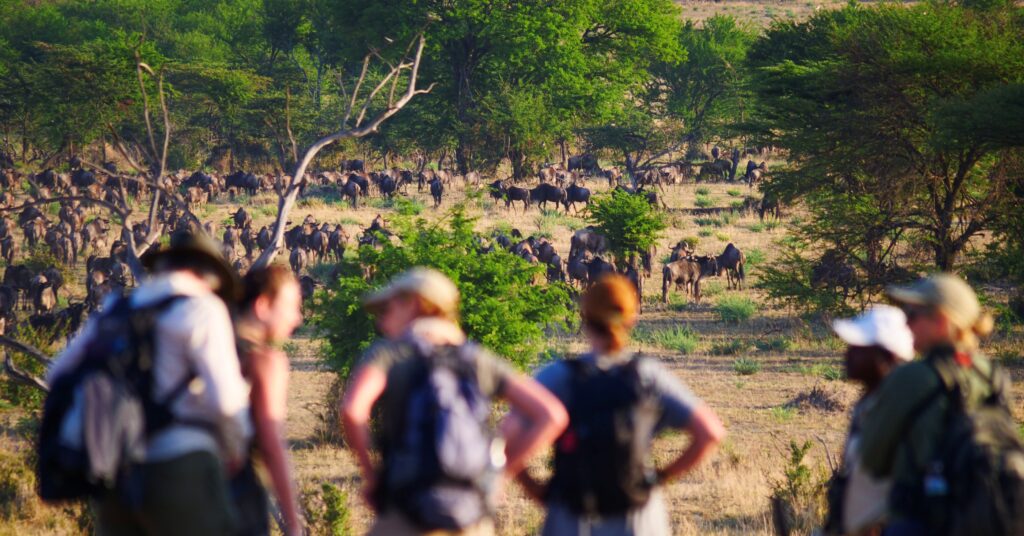
Even inside the reserve, timing changes everything. Go out very early in the morning, before the day-trippers arrive from outside the conservancies. Go over mealtimes, especially lunch, when most vehicles have retreated back to camp. Pack a picnic, plenty of snacks to keep the children going, and (of course) a copy of the Let’s Go on Safari book to keep them entertained between sightings. Time it right, and you can find yourself at a crossing point with hardly another vehicle in sight.
Our camp picks for migration season
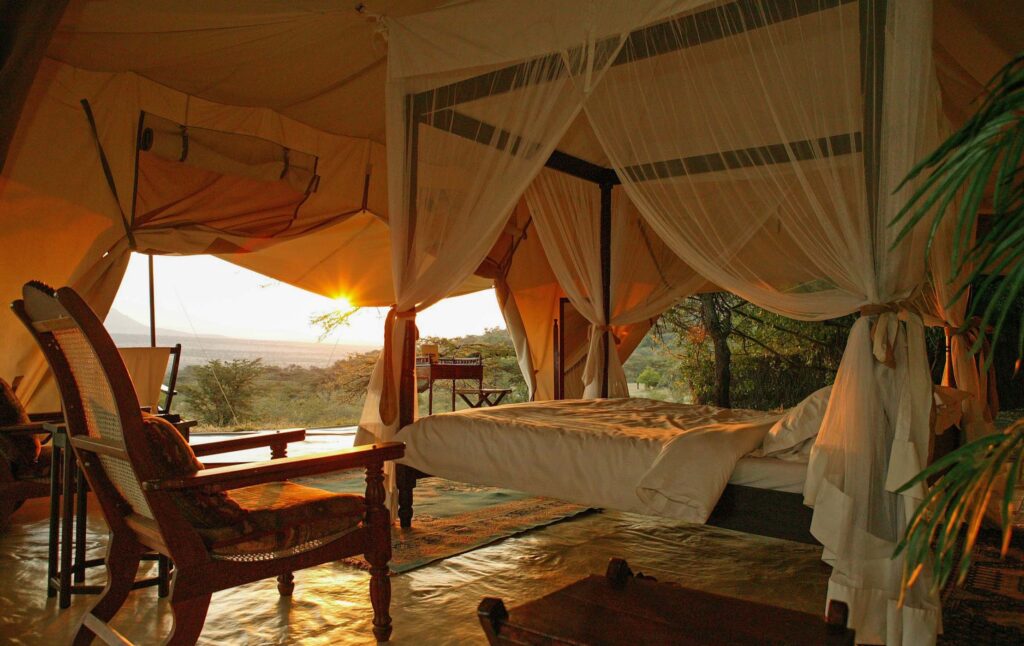
We don’t hand out a generic list of twenty camps, the right camp for you depends on your budget, travel dates, and what matters most. But if you’re asking where I’d stay, it’s always somewhere small, private, and away from the chaos of the crossing points. A few of my own favourites:
- Entumoto Toto – lovely, and kind to the budget.
- Entumoto – a little more glamorous, same wonderful setting.
- Enkopiro – wild, jungle-like, and deeply cultural.
- Enkewa – properly special, and properly hidden. One of my personal favourites.
- Offbeat Mara – a real, no-frills camp with an amazing team and no crowds, freshly refurbished.
- Cottars 1920s – pure safari 5* elegance, glorious quiet location, exceptional guiding & fabulous wildlife.
And beyond those, there are a handful of smaller, special properties tucked away from the crowds and priced far more reasonably than you’d think.
Contact us and we’ll match you to the right one for your specific trip.
The honest expectations conversation
I always tell clients: come for the migration, stay for Kenya.
The migration may deliver its most dramatic moments on your very first morning. Or you may have three days of extraordinary game viewing – thousands of animals, cheetah kills, lion cubs, endless zebra – without a single river crossing. Both of those trips are extraordinary. But only one of them looks like the poster.
The clients who have the best time are the ones who come open to whatever Kenya decides to offer. Come for the migration. Stay open to Kenya.
Book your migration safari with TSC thesafaricoltd.com →
If you’re bringing children – the puzzles from Zizibow are brilliant preparation. They’ll arrive knowing the landscape.