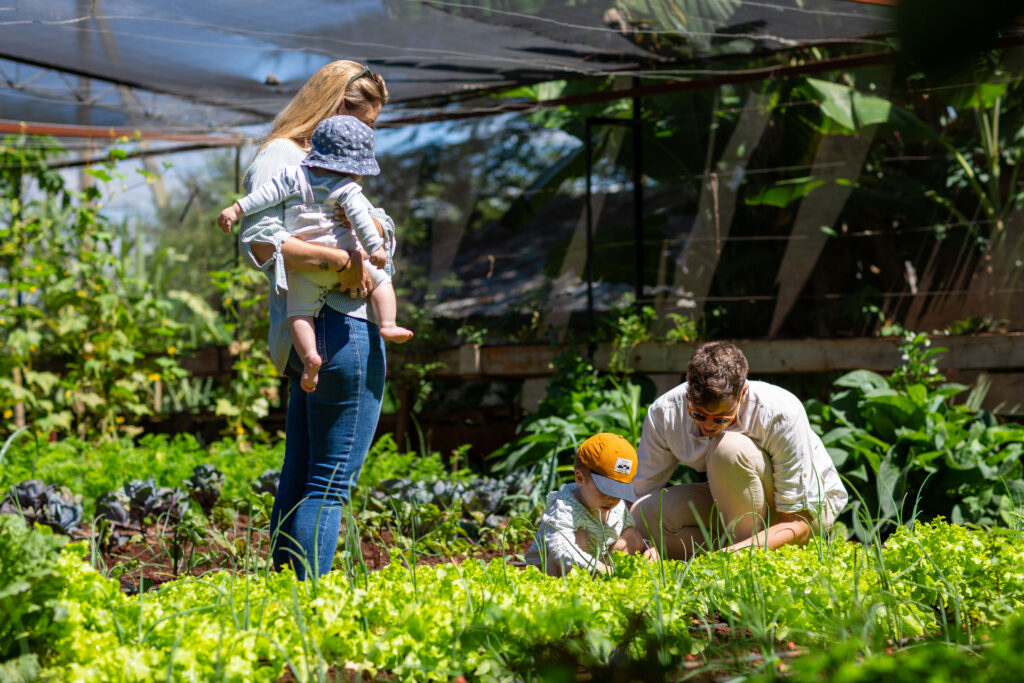
Having grown up on a tea farm, travelled the world, and seen wonderful rural lifestyles – even now my side hustle is growing chemical-free veg to sell to the community – the farm-to-fork idea means something genuine to me. And Kenya does it extraordinarily well.
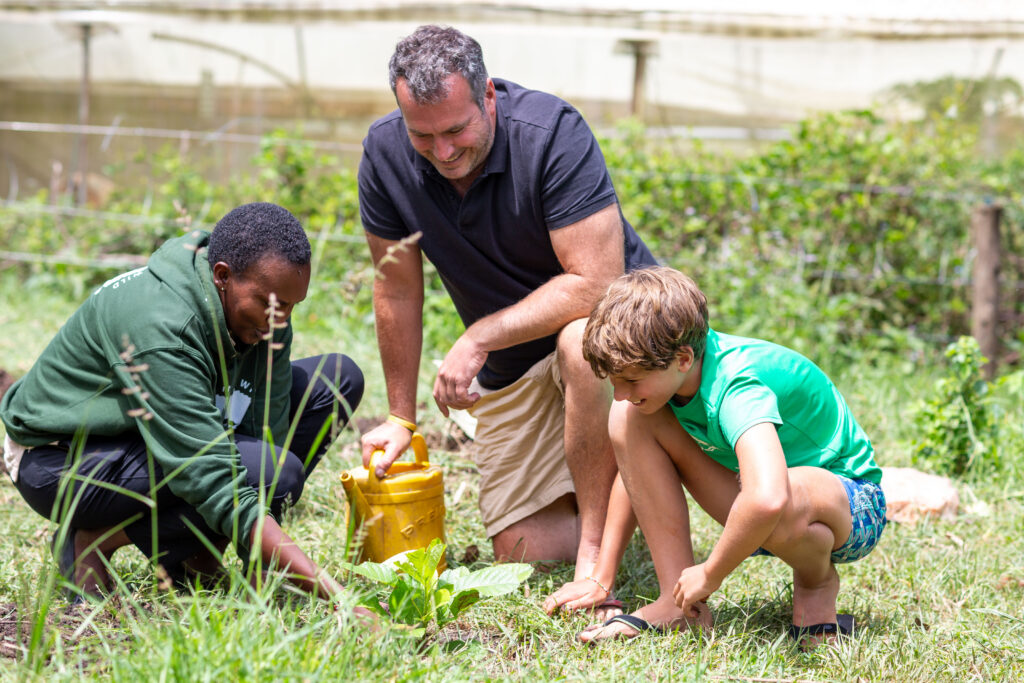
Collecting eggs before a morning game drive – why this simple thing is joyful
There is a particular kind of magic in a child in pyjamas, wellies pulled on over the top, walking out to a henhouse in the half-light before a game drive. Not because it’s exotic – it’s about as ordinary as activities get – but because of the contrast. In an hour they’ll be watching a lion. Right now they’re working out which hen is cross with them and why. That small, grounding, slightly muddy start to the day does something a five-star breakfast buffet never quite manages. It reminds everyone, kids and adults alike, that this is a real, working landscape, not a theme park built around the wildlife.
Organic farms woven into the best Kenyan itineraries
Kenya’s range of altitude, soil and climate is genuinely extraordinary – tea and coffee up in the highlands, mangoes and papayas lower down, wheat and barley on the Rift Valley floor, dragonfruit and bananas elsewhere again. What Kenya has never been short of is beautiful farming country. What it has been short of, until fairly recently, is properties that stitch that farming country properly into a safari – rather than treating it as something you drive past on the way to the wildlife.
That’s changing, and we love it. We build farm stops into itineraries not as a token half-day, but as a genuine change of pace between the more classic safari legs – somewhere your children can get their hands properly dirty and your dinner plate can trace back to a specific field you walked through that afternoon.
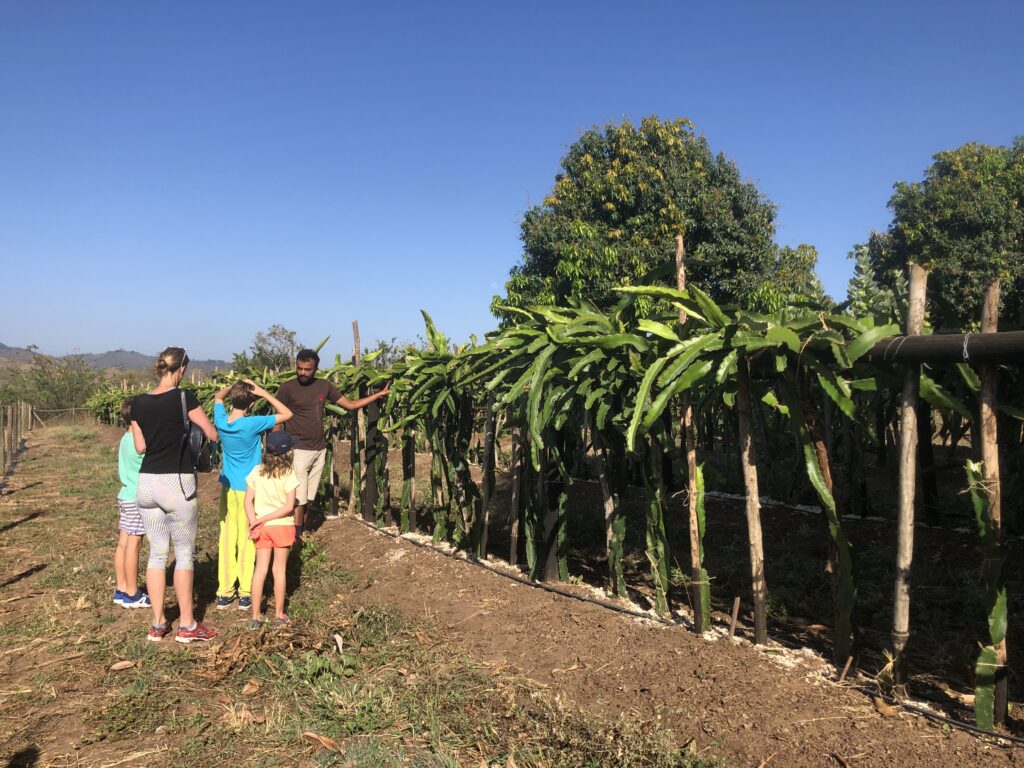
What sisal is, how tea is made, and a little organic cheese factory visit
Sisal is one of those crops everyone’s seen and almost nobody can name – the neat, spiky, blue-grey rows you pass driving the Nairobi-Mombasa road through Taita Taveta, planted alongside the baobabs. It’s a hardy, drought-tolerant plant that takes four or five years to mature, and its long fibres are turned into rope, twine and the baskets Taita women have woven for generations. Once you know what you’re looking at, that stretch of road is never boring again.
Tea, up in the cool highlands around Limuru and Kericho, is a different rhythm entirely – hand-plucked two leaves and a bud at a time, then withered, rolled, oxidised and dried, all within about 24 hours of coming off the bush. Watching that process, and tasting the difference between a leaf picked that morning and a supermarket teabag, changes how you drink tea forever.
And for something a little different, a small organic cheese factory and farm tour – the kind where you can watch the curds being worked by hand, meet the cows responsible, and then sit down to a proper farm-to-fork lunch built entirely from what’s grown on site – is one of our favourite half-days near Nairobi. It sounds like a small thing on paper. In person, it’s one of the things people mention months later.
Coffee farm stays – waking in a working plantation
Kenyan coffee has a reputation that precedes it – bright acidity, that distinctive blackcurrant note, grown on the iron-rich volcanic soils of the central highlands. Touring a working coffee estate and learning the journey from cherry to cup is wonderful in its own right, but waking up inside one – coffee rows outside your window, the smell of roasting drifting across before breakfast – is another thing entirely. We look for farm properties where the accommodation itself sits inside the working estate, so the farm isn’t something you visit for an afternoon, it’s something you’re actually staying in.

Why this is better for communities and the environment
Farm-to-fork tourism keeps money genuinely local in a way that’s harder to guarantee elsewhere. The eggs, the vegetables, the cheese, the tea leaves themselves – all grown, picked and prepared by people who live on or near that land, rather than trucked in from somewhere else. Several of our favourite farm stops also support charities and community groups directly – places like Kenana Knitters, whose work we’ve loved for years, or the women’s groups behind so much of Kenya’s basket-weaving and craft tradition. Chemical-free farming, which is close to my own heart with our own veg patch, also means healthier soil, healthier waterways and a genuinely lighter footprint than intensive agriculture. It’s tourism that leaves the land and the people on it better off, not just visited.
TSC’s Farmie Safari itinerary
Our Farmie Safari threads exactly this through a proper Kenyan trip: a night or two on a working farm near Nairobi – eggs, a cheese tour, maybe a tea or coffee estate depending on the route – followed by classic safari time in Laikipia or the Mara, and the option to finish with a Rift Valley detour past the flower farms and lakes if you have the days to spare. It’s not a replacement for the wildlife. It’s the thing that makes the wildlife feel like part of a bigger, more honest picture of Kenya, rather than a highlight reel. If that sounds like your kind of trip, get in touch and we’ll build it around your dates.
Start planning your Farmie Safari thesafaricoltd.com →